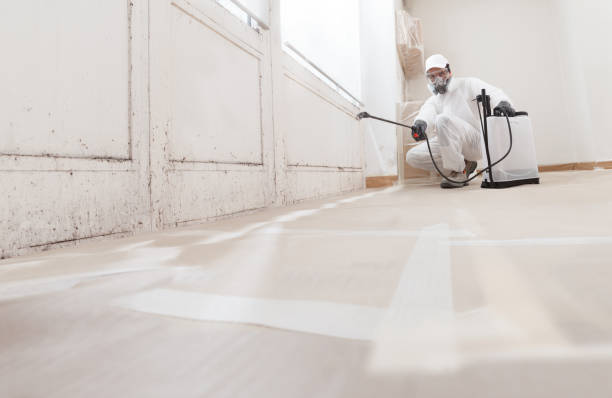
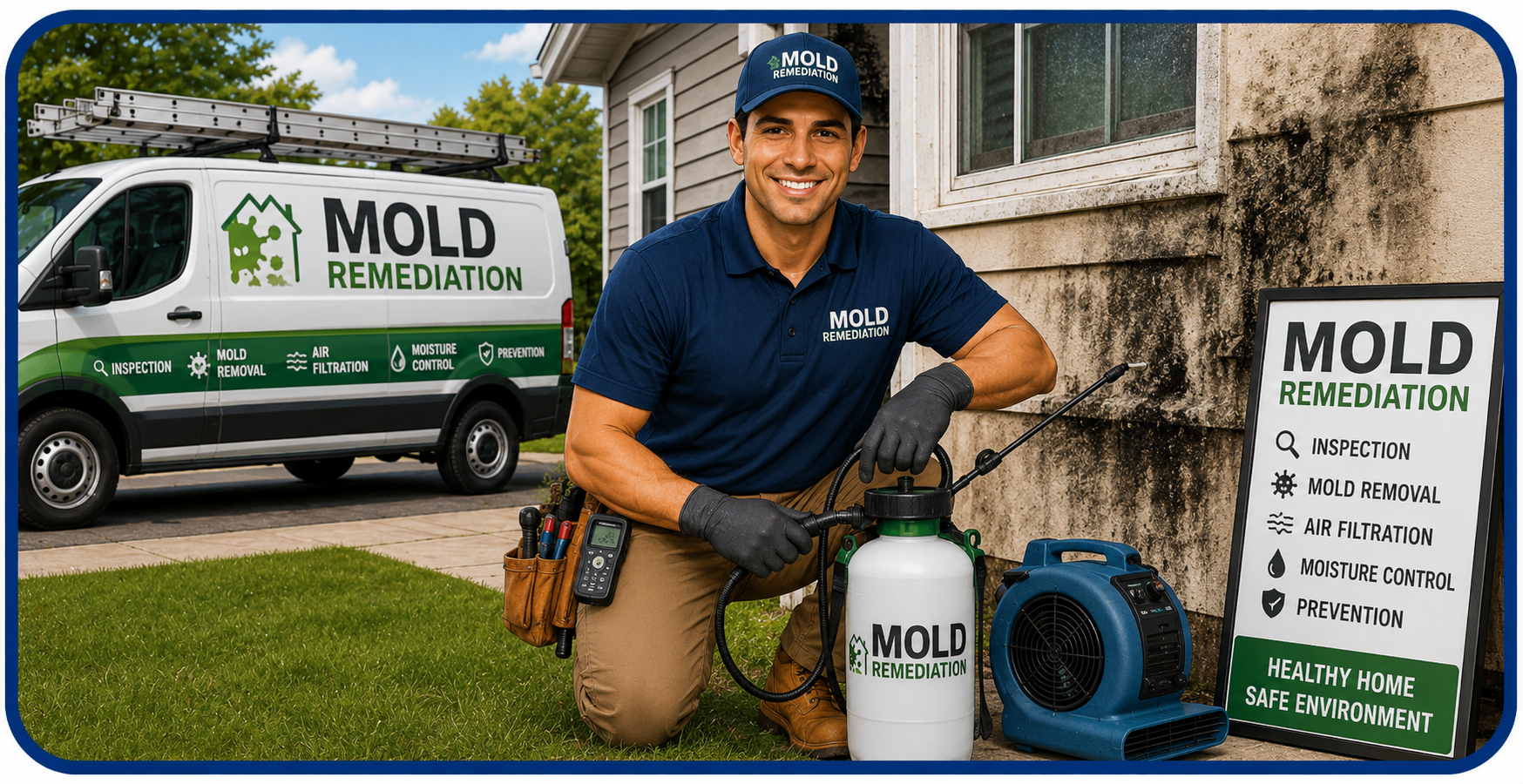
From concrete block mold to post-flood drywall removal — every basement mold scenario covered in Trenton, GA.
🔍
Basement Mold Assessment & Moisture Source Investigation
Our Trenton, GA specialists assess your basement with calibrated moisture meters at block walls, slab, and framing; relative humidity readings; thermal camera sweeps for hidden moisture; and visual mapping of all visible mold growth areas. Findings documented with photos and moisture readings before scope is proposed.
🏗
Drywall & Framing Mold Removal
Contaminated basement drywall and framing removed under containment. Remaining structural surfaces treated with EPA-registered fungicide. Moisture pathway addressed before any rebuild recommendation.
🏔
Concrete Block Wall & Slab Mold Treatment
Mold on poured concrete or block basement walls is common in Trenton, GA homes with below-grade moisture infiltration. Concrete surfaces are wire-brushed to remove loose growth, treated with penetrating EPA-registered fungicide, and evaluated for waterproofing needs. Efflorescence and active moisture wicking are documented for the waterproofing recommendation.
💨
Post-Flood Emergency Mold Remediation
Basement flooding from sump failure, drain backup, or groundwater intrusion triggers mold within 24–48 hours on all porous materials. Our Trenton, GA 24/7 emergency response includes water extraction, moisture assessment, content protection where possible, and immediate setup of structural drying — followed by mold remediation of affected materials after the drying window.
🔥
Basement Insulation Removal & Replacement
Contaminated fiberglass batt removed from basement wall cavities and replaced with closed-cell foam or rigid insulation — materials that don't wick moisture or support mold growth in below-grade applications.
📄
Dehumidifier Sizing & Installation Recommendations
After Basement Mold Remediation, chronic basement humidity must be controlled to prevent recurrence. We size whole-basement dehumidifiers based on square footage, ceiling height, moisture load, and existing HVAC capacity — and specify drain-line routing so the unit doesn't require manual emptying. Where HVAC-integrated dehumidification is appropriate, we document that recommendation as well.